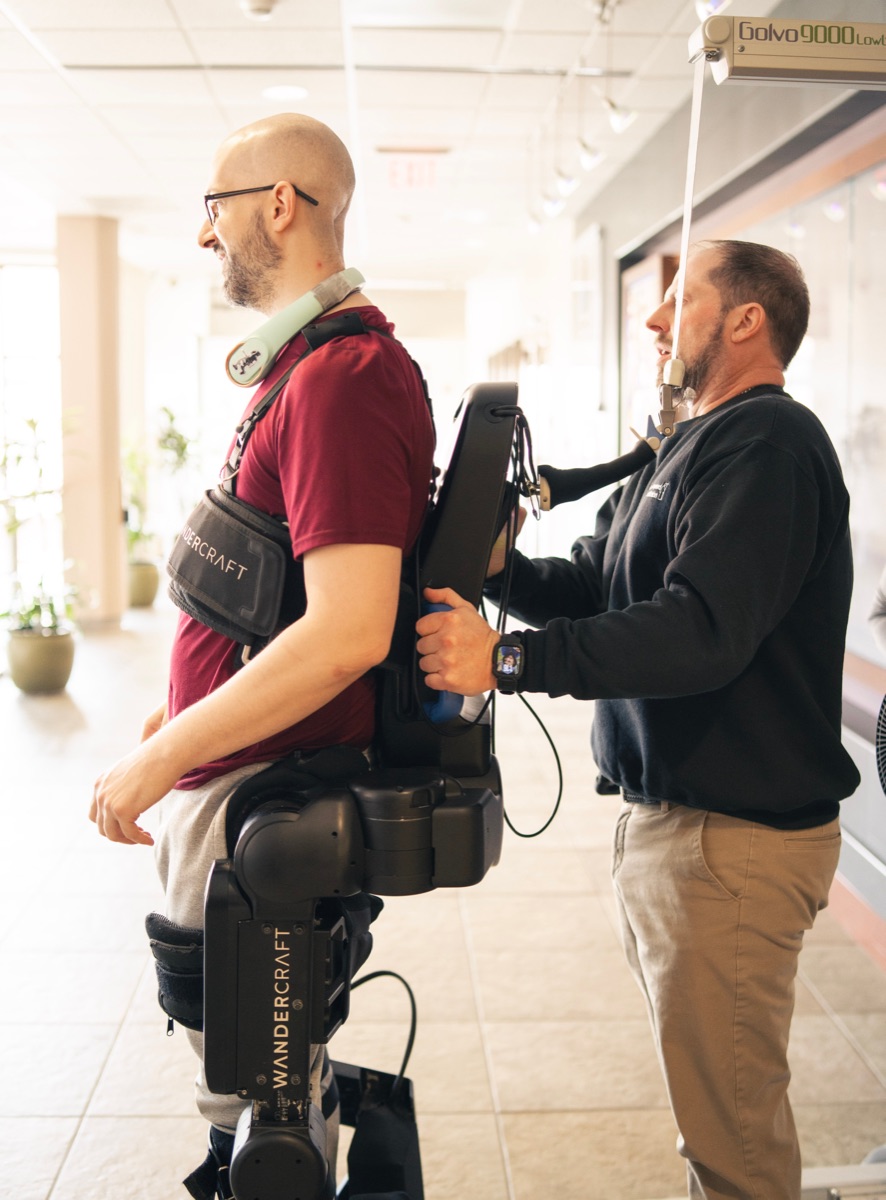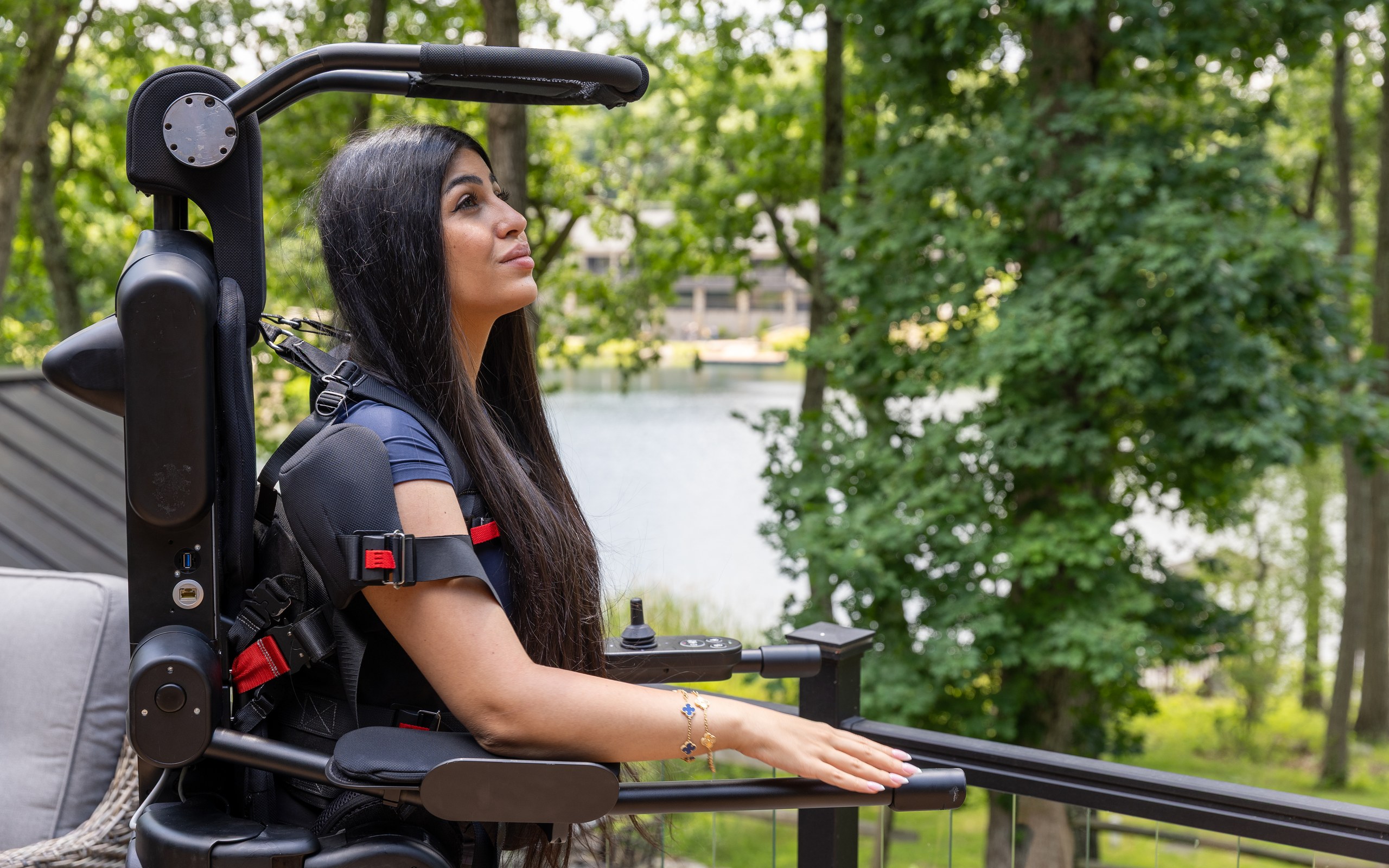

What if robotics could bring a whole new approach to mobility to your everyday life?
Assess your eligibilityFor millions of people living with a disease or after an accident, life is about recovering daily routines. The mobility options available until now limit access to upright mobility or eye-level socializing.
Born from years of treating thousands of people who wanted to walk beyond rehabilitation, Eve helps wheelchair users regain upright mobility and hands-free autonomy in the presence of a trained companion.

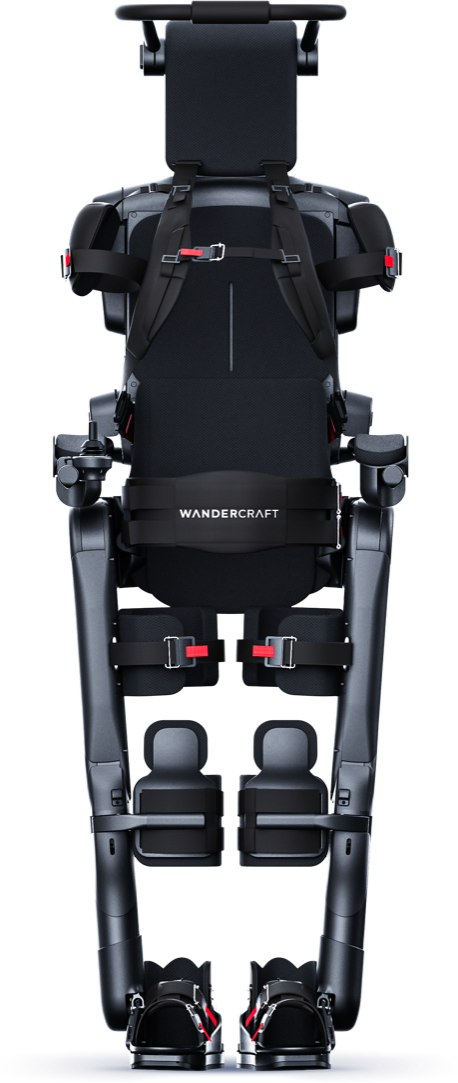
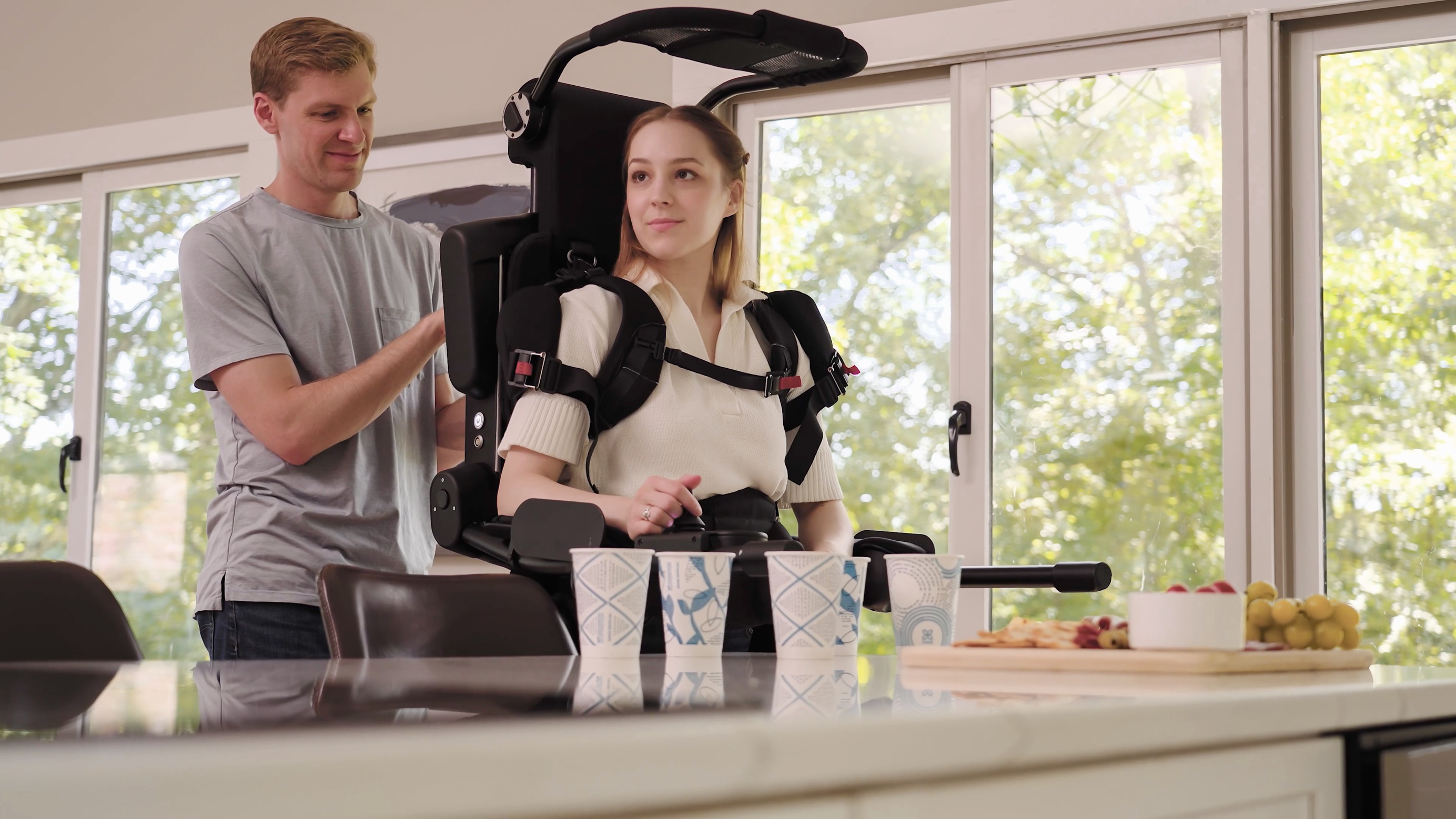
Eve Personal Exoskeleton is FDA-cleared under K260381 for adults with spinal cord injury at any level.
Talk to a specialist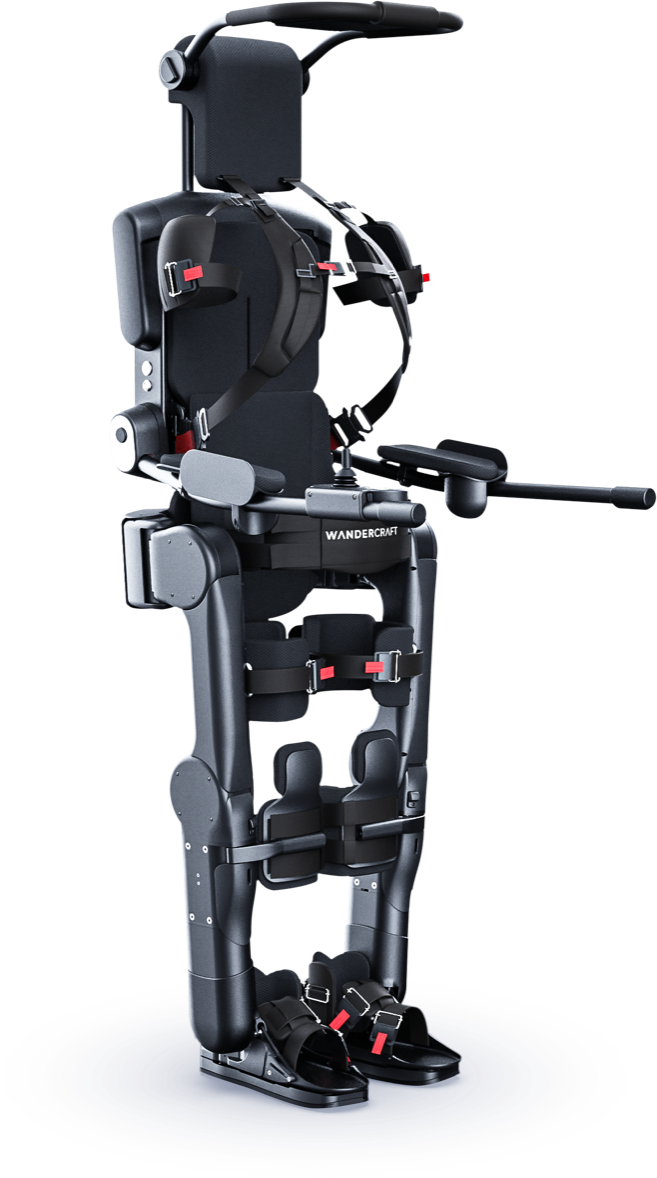
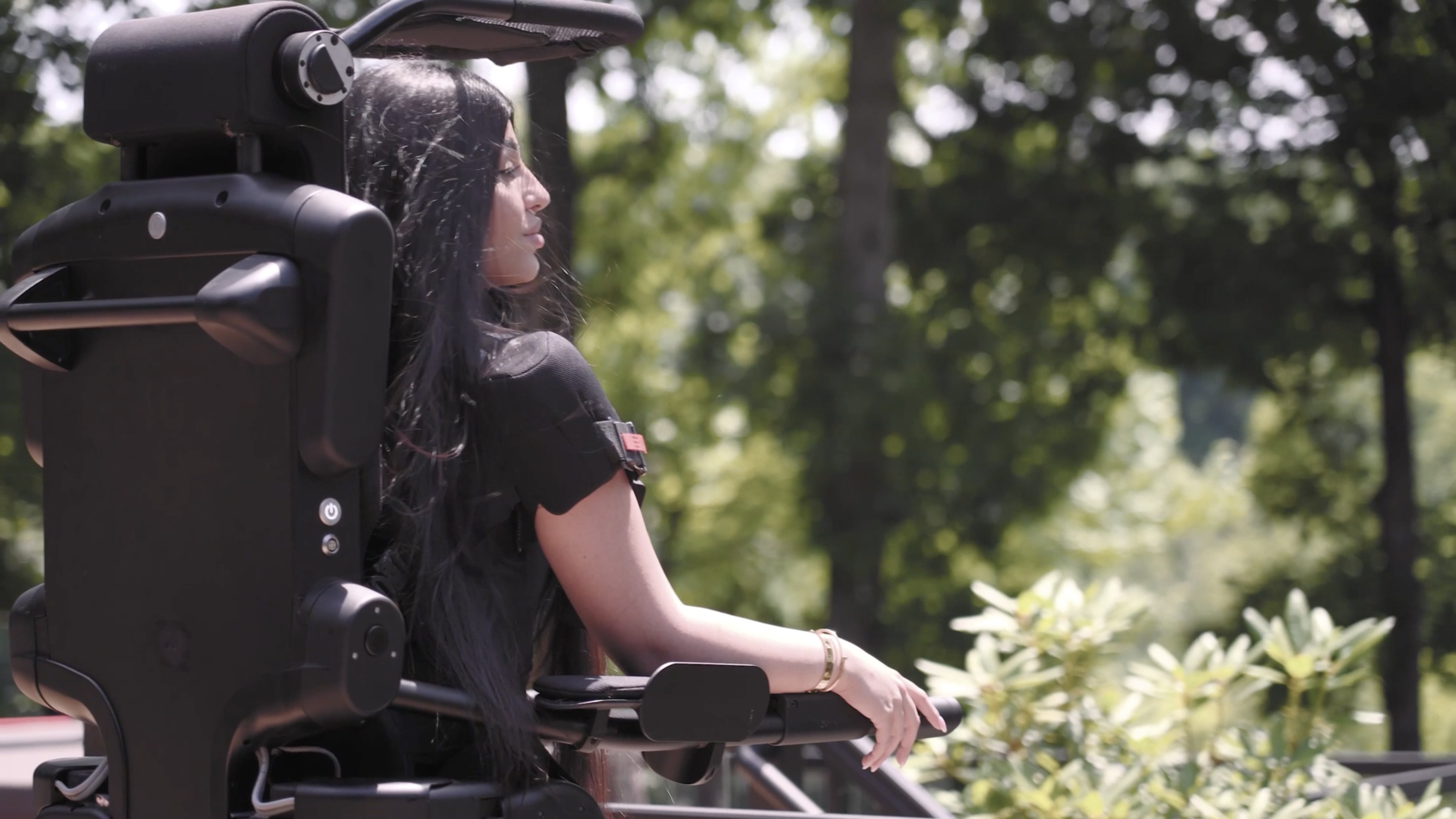
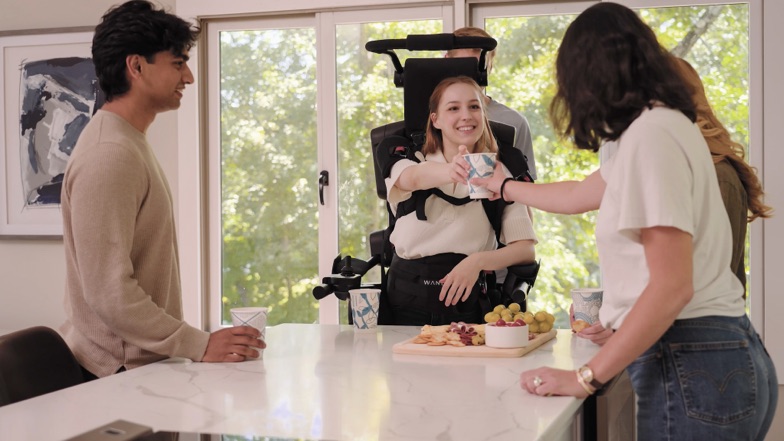
Having a conversation at eye-level, baking a cake, brushing your teeth, interacting with loved ones while upright.
Rooted in medical robotics trusted in over 150 clinical centers worldwide.
Designed for the spaces you live in, inside and on your rooftop terrace, around the people you care about, with both confidence and control.
Crafted with medical-grade components, engineered for daily use, and built for long-term reliability. Both hardware and software are customized to the user.
Every Eve journey begins with a personalized evaluation. Following you through the process, with specialized training and maintenance support.

battery life

no crutches

movement

degrees of freedom
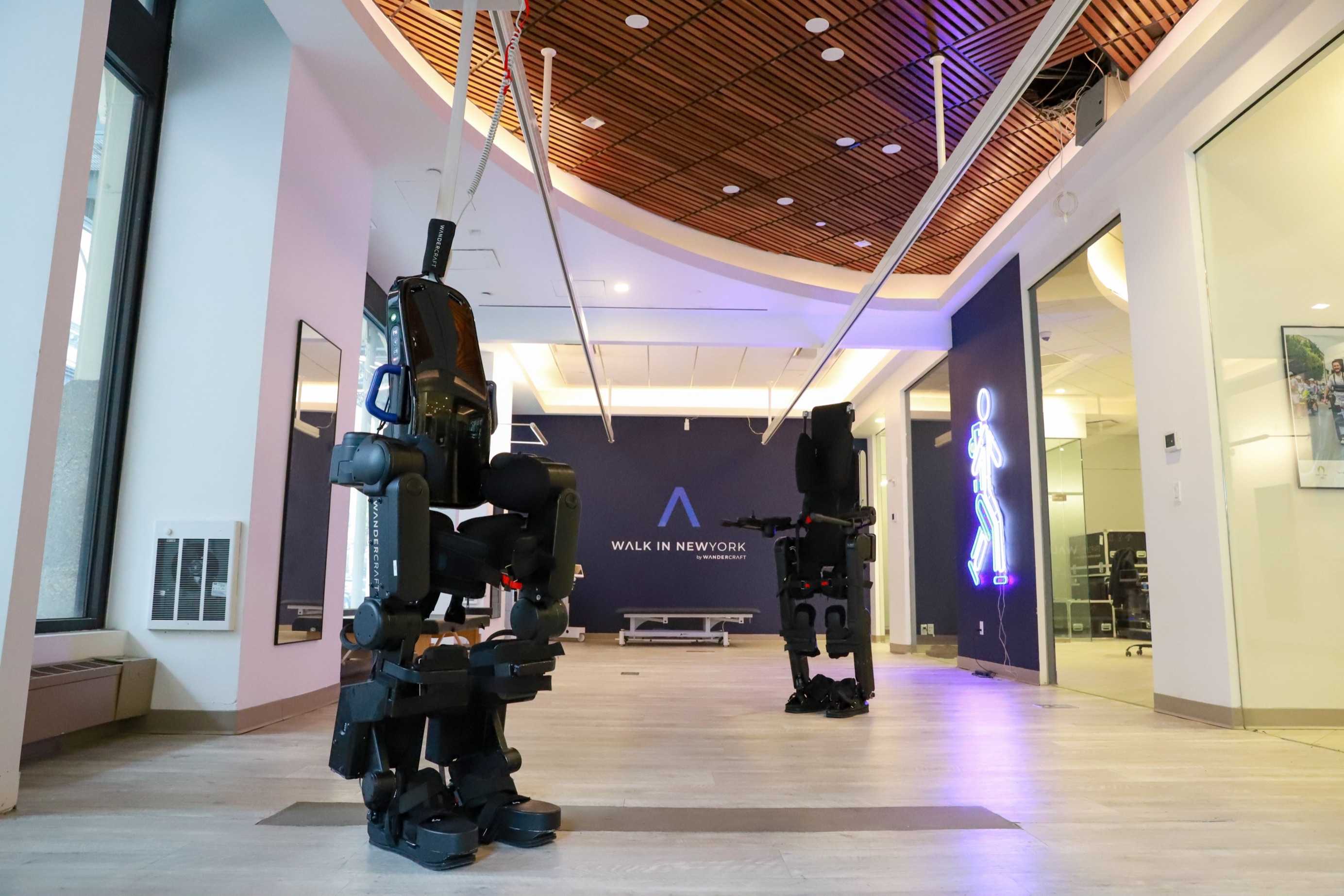
Eve is delivered through a structured evaluation that starts with a virtual screening. Then our clinicians deliver test sessions with you and your companion to confirm both your eligibility and guide you, so you know exactly what to expect.
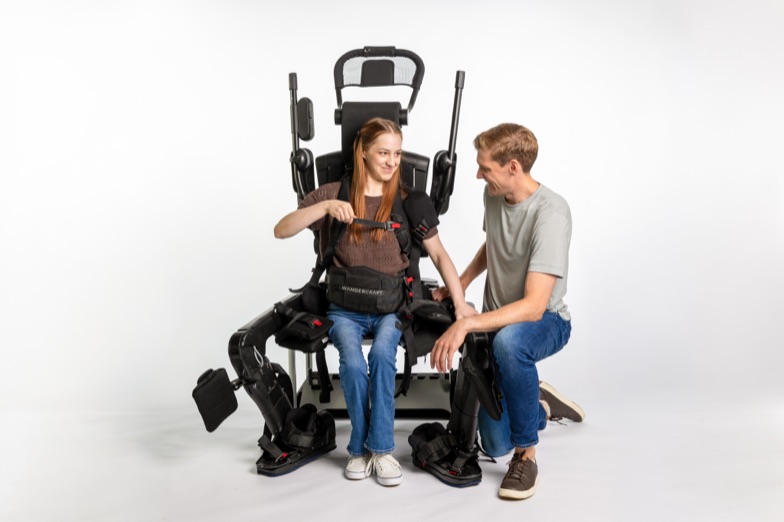
Once your eligibility is confirmed, you and your companion can start your training journey with certified trainers. In an effective 5-session program of about two hours each, in as little as one week or spaced out over 30 days, you will achieve certification.
Once you and your companion are certified, you will be ready to welcome your Eve exoskeleton home and experience upright mobility in everyday life!
Questions

Eve is a self-balancing personal exoskeleton for everyday life. It lets you stand up and walk hands-free — no crutches, no walker — so you can turn, reach and use your hands while upright: standing at a kitchen counter, having a conversation eye to eye, getting to the bathroom sink. Because Eve balances itself, upright autonomy is possible even without trunk control, in the presence of a trained companion. Eve is designed to complement your wheelchair, not replace it.
Eve is for adults 18 and older with spinal cord injury at any neurological level who can operate Eve with the controller and can tolerate a standing position. There are physical limits too, because Eve is fitted to your measurements: up to 220 lb (100 kg) and 6 ft 4 in (1.94 m), within set ranges for thigh length, leg length, pelvis width and joint mobility. Eve is a prescription device, so the final decision always rests with the licensed practitioner who prescribes it, after an individual assessment.
Yes. Eve is cleared by the FDA under K260381 for adults with spinal cord injury at any neurological level. It is a Class II medical device available by prescription only, so a licensed healthcare practitioner has to prescribe it. Eve becomes commercially available in the United States on September 17, 2026. Other regions will follow.
Yes, every time. Eve is used in the presence of a trained companion, who trains and is certified alongside you and stays within arm's reach while you walk. Your companion is also the person who helps you safely out of the device if anything goes wrong. Companions are assessed too, including a physical test showing they can keep hold of the device if you lose balance.
On level indoor areas, and on level surfaces in open-air spaces that are part of your building: a patio, a terrace, a courtyard. The surface has to be firm, dry and smooth — tile or other smooth hard flooring, low-pile carpet, or concrete in those open-air areas. Eve is not for stairs, slopes or ramps including ADA curb cuts, wet or icy ground, crowded areas, parking lots or roadways, and it is not intended for sports. It must never be used to cross a public street, because its walking speed is too slow for that to be safe.
You and your companion train together and are certified together, after a clinical assessment and an individualized fitting. The program is five sessions of about two hours each, run by certified trainers, mixing explanation with hands-on practice. It covers transfers, operating the remote controller, walking on level surfaces, activities of daily living, and safety and emergency procedures, and it ends with an assessment covering both normal use and emergencies. Can be completed in as little as one week, or spread over about 30 days.

The hands-free exoskeleton bringing rehabilitation to patients across the globe.