Veröffentlichte Evidenz zu Atalante X und Eve und die zugehörigen Dokumente
The principles guiding rehabilitation with Atalante X.
Early mobilization improves functional recovery and lowers complication risk.
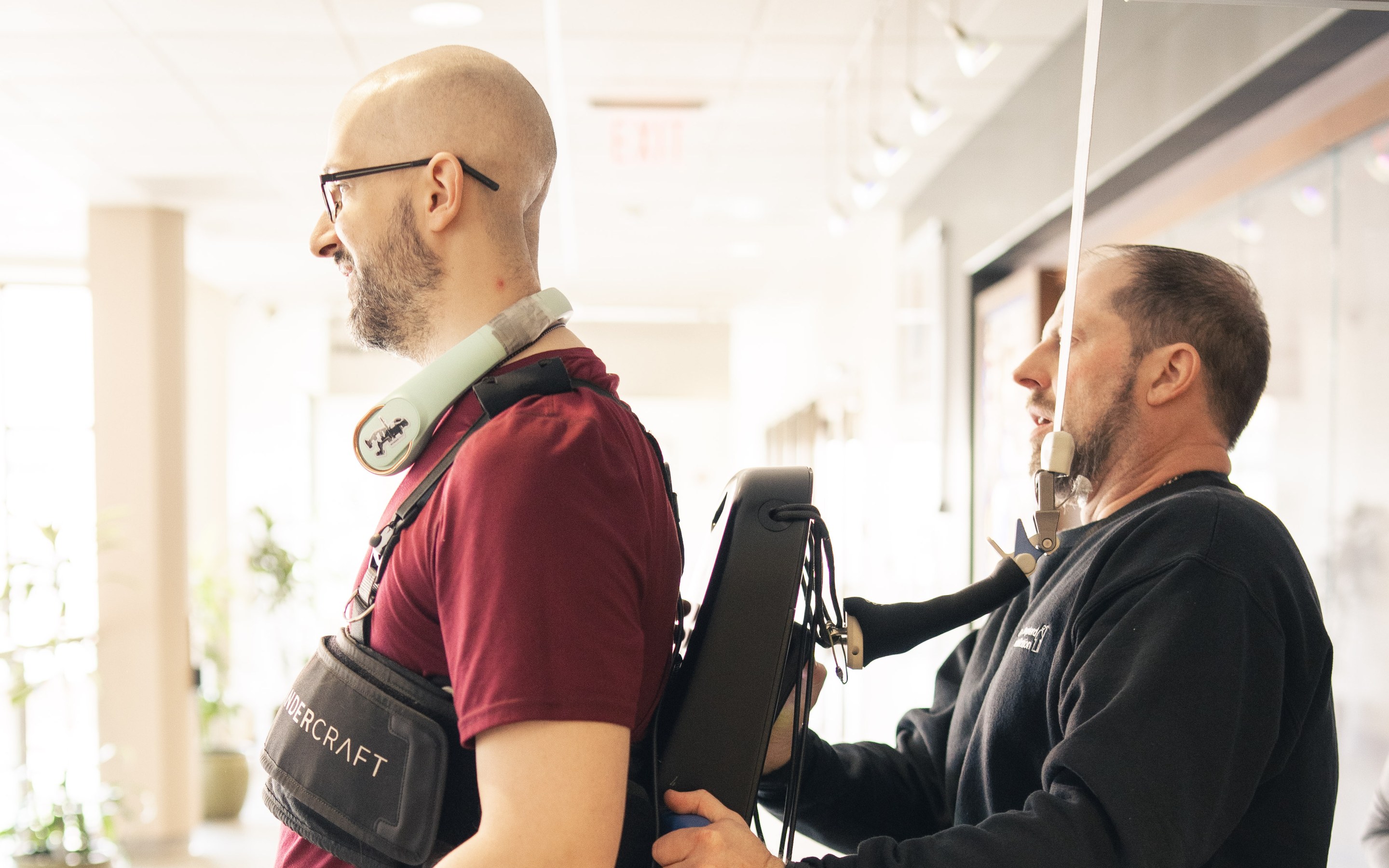
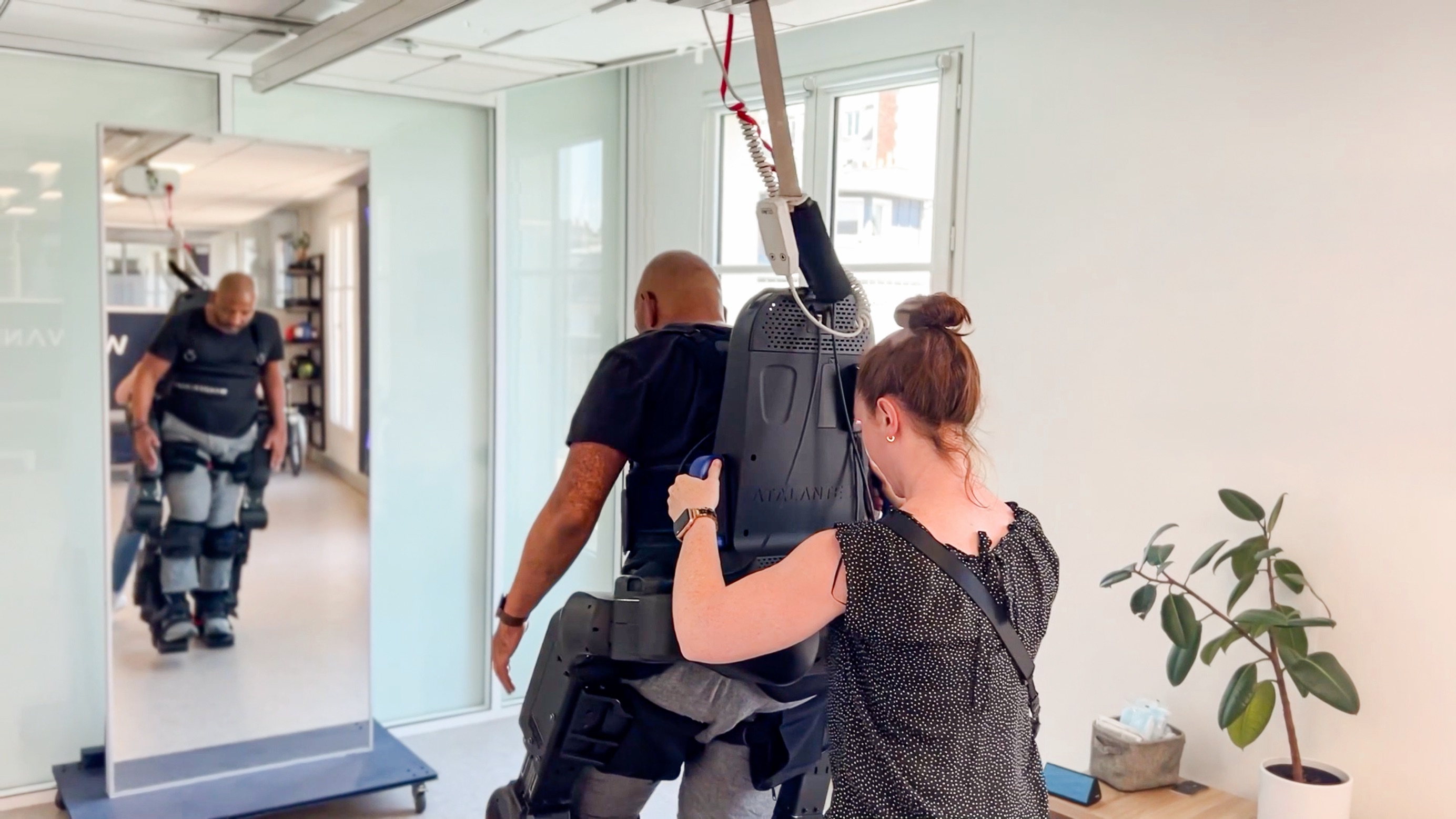
Atalante X's self-balancing, hands-free design lets patients stand and walk from the first rehab stages.
Higher repetition and effort per session drive measurable gains: motor function, gait speed, balance, endurance, and everyday autonomy.
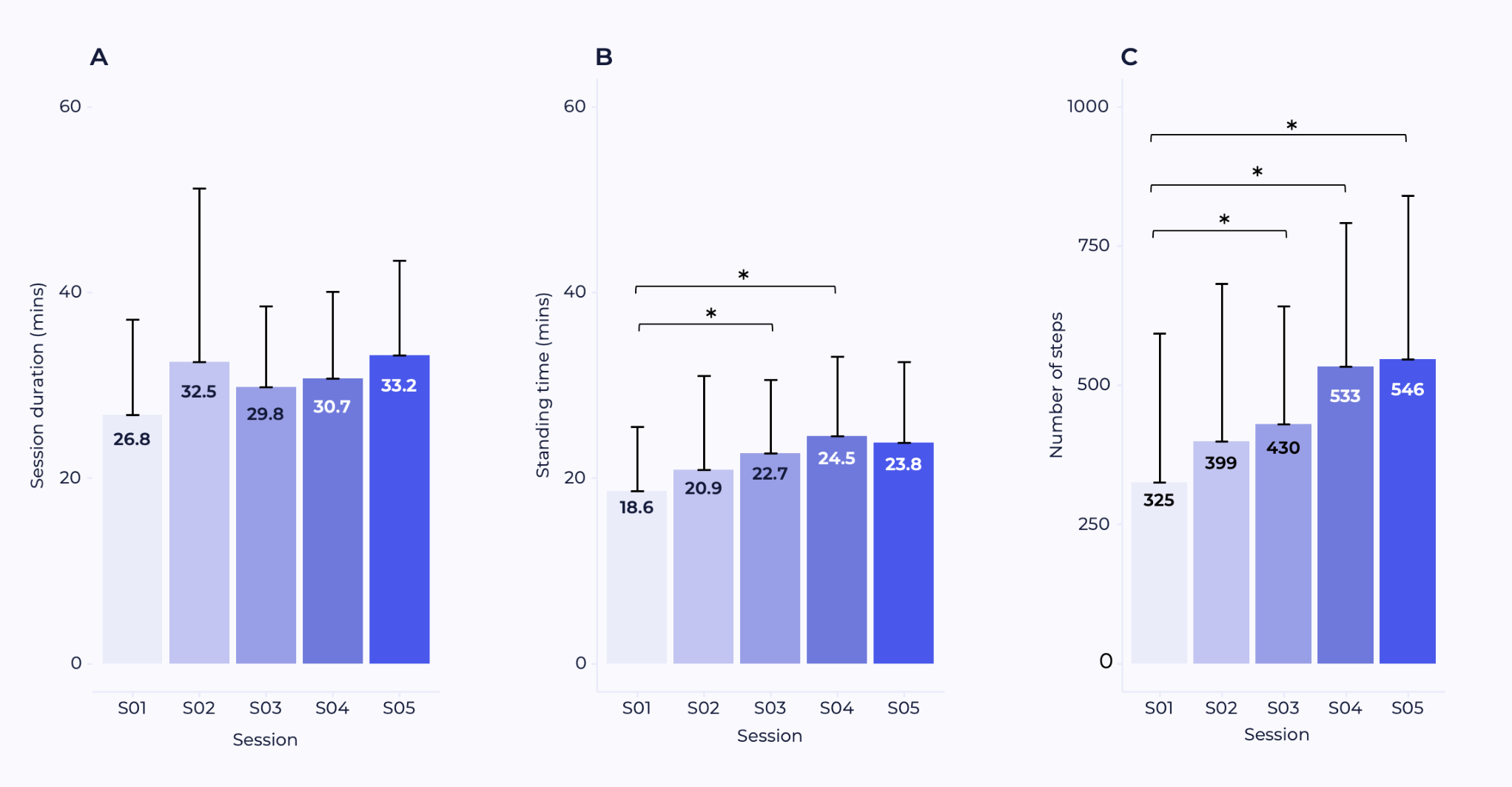
Atalante X enables hundreds to thousands of steps per session (averaging 600, with patients in active mode 37% of the time).
Findings draw on peer-reviewed studies and the 2022 INSPIRE study.
Wandercraft is launching its first international multicenter trial to confirm these results.
Clinical evidence
Rehabilitation with Atalante X may support patients' physical improvement — endurance, ambulatory capacities, balance and trunk postural control.1
Atalante X is safe to use for diverse populations and patients living with stroke and spinal cord injury.1
Patients who used Atalante X report extremely high satisfaction rates, up to 100%.1
Key takeaways, Benefits of Atalante X one-pager, December 2024
After a stroke
After 5 sessions of Atalante training patients had improved gait speed by 0.05 ± 0.08 m/s (p=0.002), improved endurance by 11.6 ± 18 meters (p=0.001), improved ambulatory capacities (FAC score) by 0.6 ± 1.0 point (p=0.002) and improved balance (BBS score) by 6.2 ± 8.1 points (p=0.0001).1
87% patients were satisfied with the program and would recommend it to other stroke patients.1 The peer-reviewed INSPIRE safety study reports the same program in full.2
INSPIRE — 31 patients, 6 centers. Results measured without the device.
What patients report
The level of satisfaction at the end of the program was 86%.1
Patients with paraplegia also reported improved sitting balance, psychological well-being and endurance.4
Post Market Clinical Follow-up Report — 18 patients, 16 centers

Tetraplegia and high paraplegia
We can conclude that the use of Atalante X exoskeleton is safe and feasible with this population.5
One adverse event in 547 Atalante sessions.6 The peer-reviewed retrospective adds: after individual benefit-risk assessment, the Atalante exoskeleton can be safely used in a clinical setting for high SCI patients.7
QUATRO — 33 patients with spinal cord injury, 3 centers

In intensive care
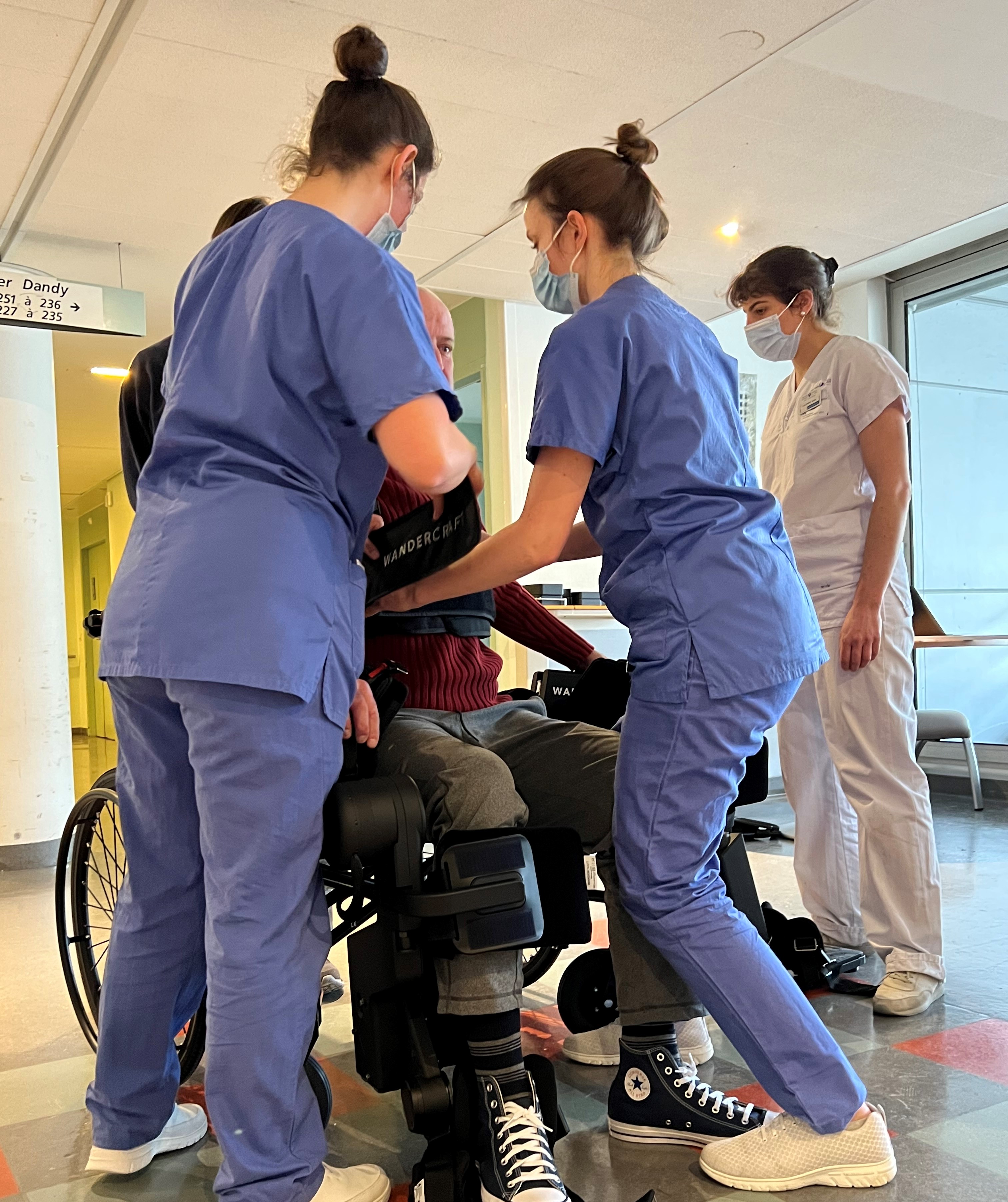
Physiotherapy using Atalante in the acute neurosurgery setting is safe and feasible. Staff organization is a key element of success.18
Average time of verticalization was 16 minutes, and 100% of patients were satisfied and expressed a desire to repeat exoskeleton sessions.1 ICU-acquired weakness is equivalent to 40% loss of muscle strength in one week of immobility.9
17 patients, 1 center. The newest area of use, and the smallest evidence base so far.

Outside a trial
Registry and program data from centers running Atalante X in ordinary clinical routine, rather than under study conditions.
patients across 34 rehabilitation centers in Europe and the United States, February 2021 to November 202310
steps walked in one year by more than 60 patients at a single rehabilitation institute11
of weekly sessions in ALERT, with sitting balance and walked distance both improved12
An exoskeleton is not there to replace the work of a physiotherapist, it's a tool that can be used to improve patients' outcome through a high-tech, innovative interaction between physiotherapists and patients.
13
Franco Molteni, Villa Beretta Rehabilitation Research Innovation Institute
Document library
Every study, poster, one-pager and case report we publish in English, newest first. Downloading a document asks for your details once, then never again on this device.
Eve and Atalante X are separate devices with separate regulatory clearances, and evidence for one does not apply to the other.
Echte menschliche Expertise – bei jedem Schritt.

Gang-Exoskelette wie Atalante X sind innovative Werkzeuge in der Versorgung von Menschen mit Gangstörungen. Sie ermöglichen es, die Rehabilitationsarbeit zu maximieren, geben Hoffnung auf eine bessere Erholung nach einer neurologischen Verletzung und tragen dazu bei, dem Auftreten von Komplikationen infolge längerer Immobilisierung vorzubeugen.

References
Numbered in the order they appear above. Most can be downloaded here; where one cannot, the reason is printed beside it.
Two sources describe exoskeleton-assisted walking across several manufacturers' devices rather than ours — a 2020 mobility-skills study of ReWalk and Ekso14 and our own review of rehabilitation practice in spinal cord injury15. Their findings are about the modality, not about Atalante X or Eve.
Wandercraft. Benefits of Atalante X — one-pager. ATA_EU_EN_CLI_017A, December 2024.
Lejeune T, et al. Hands-free Atalante exoskeleton in post-stroke gait and balance rehabilitation: a safety study (INSPIRE), 2025.
Wandercraft. Assessment of the use of the Atalante exoskeleton in patients with hemiplegia: INSPIRE results. ATA_EU_EN_CLI_007A.
Burgos-Tirado N, et al. Patient reported outcomes: a study on the use of the Atalante self-balancing exoskeleton in paraplegic patients. ACRM congress poster, 2024.
Wandercraft. QUATRO study one-pager. ATA_US_EN_CLI_019A, 2025.
Durand A, et al. Safety evaluation of Atalante exoskeleton in patients with tetraplegia and high paraplegia (QUATRO). AAPM&R congress poster, 2025.
Prévinaire J-G, Baillet H, Bel J-F, Péan V, Cuenot C. Retrospective safety evaluation of the Atalante exoskeleton in a clinical setting in patients with tetraplegia and high paraplegia. Spinal Cord Series and Cases (2026) 12:17.
El Kaim A, Serra M, De Noray H, Lallemant A, Gobatto C, Degos V, Carpentier A, Riche M, Apra C. Safety and practicality study of using an exoskeleton in acute neurosurgery patients. Acta Neurochirurgica (2024).
Independent publication. The authors declare no conflict of interest.
Wandercraft. Benefits of early mobilization in ICU. ATA_US_EN_CLI_018A, January 2025.
Combes G, et al. Use of Atalante in neurological rehabilitation: insights from real-world data across Europe and the US (SUPERSET). ACRM congress poster, 2024.
Wandercraft. Customer success story: Villa Beretta Rehabilitation Research Innovation Institute. ATA_WW_EN_CLI_016A, 2024.
Nuic D, et al. Long-term self-balanced exoskeleton rehabilitation to treat lower limb weakness in adult population (ALERT). ACRM congress poster, 2024.
Molteni F, et al. Advancing neurologic rehabilitation: first-year outcomes and insights from VBRII's exoskeleton program. RehabWeek congress poster, 2025.
Hong D, et al. Mobility skills with exoskeletal-assisted walking in persons with spinal cord injury, 2020.
Cited only. This study evaluated ReWalk and Ekso — devices made by other manufacturers — so it is not published as Wandercraft material.
Wandercraft. Rehabilitation practices in SCI patients. ATA_EU_EN_CLI_012A.
Cited only. The review is largely about other manufacturers' devices, so it is not published as a Wandercraft download.
